International Holding Structure in the UAE
For an entrepreneur with assets in several countries, we developed a UAE holding structure that consolidated business ownership, improved banking transparency, and created a foundation for asset protection, succession planning, and family residency.
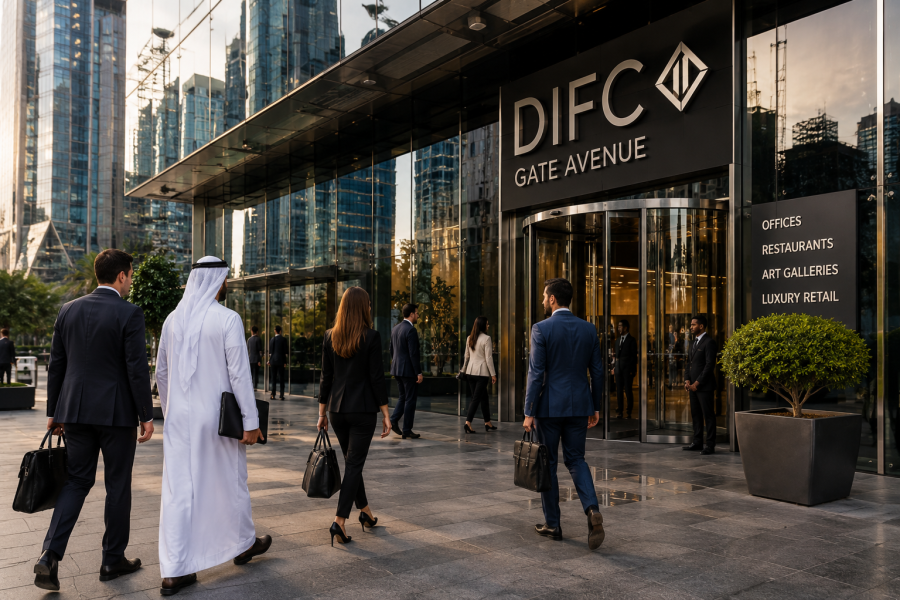
Client Request
We were approached by a Russian entrepreneur who owned several businesses across different jurisdictions. His assets included an IT company in Russia, a manufacturing business in Kazakhstan, and an equipment distribution company in Europe.
All three businesses operated independently, had separate bank accounts, different reporting systems, and their own management teams. At the same time, the ownership structure was based on the entrepreneur’s direct personal ownership in each company.
By the beginning of the project, this model had started to create several risks for the client: management complexity, tax exposure, banking compliance issues, succession planning challenges, and asset protection concerns.
The client wanted to move from fragmented personal ownership to a clear international structure that would centralize control over the assets, simplify cash flow management, create a basis for succession planning, and establish a sustainable personal and corporate infrastructure in the UAE.
Situation
At the time of the request, the client controlled three businesses in different countries.
The IT company operated in Russia, the manufacturing company was based in Kazakhstan, and the distribution business operated in Europe. Formally, the assets were not consolidated into a single group: each company was owned directly by the client, serviced by a separate bank, and maintained its own financial reporting.
In practice, this created several issues.
First, the client spent a significant amount of time controlling finances, reconciling reports, and coordinating payments between the companies. The group’s management depended heavily on the owner’s personal involvement and was not structured as a unified corporate system.
Second, the assets were not sufficiently protected from each other. If one of the companies faced claims from counterparties, creditors, or authorities, this could create risks for the owner’s personal wealth and other assets within the group.
Third, the client had started thinking about transferring the business to the next generation. Under the direct ownership model, succession could have led to a fragmentation of assets, disputes between heirs, and significant complications in management.
Another important factor was tax and banking transparency. The client understood that the international structure had to be economically justified rather than purely formal. It needed a clear holding function, proper beneficial ownership disclosure, readiness for bank KYC, and careful consideration of tax implications in each jurisdiction.
Objective
Our task was to develop an international holding structure in the UAE that would consolidate the client’s assets and address several objectives at the same time.
The structure had to:
- centralize ownership of companies in different countries;
- reduce the client’s dependence on direct personal ownership;
- create a clearer asset management model;
- establish a basis for succession planning;
- increase asset protection from operational risks of individual companies;
- take into account tax implications in Russia, Kazakhstan, Europe, and the UAE;
- prepare the structure for banking compliance;
- create an opportunity for the client and his family to obtain UAE residency.
Solution
After analyzing the client’s assets, we proposed a UAE holding structure using a DIFC Foundation and a DIFC holding company.
This approach allowed us to separate personal ownership, asset management, and succession planning.
The top level of the structure was organized through a DIFC Foundation. This is a separate legal structure that may be used for asset ownership, family planning, and the transfer of control to the next generation without directly splitting shares between heirs.
The middle level was a DIFC holding company. Its main function was to hold shares in the operating companies, consolidate dividend flows, interact with banks, and manage the corporate structure.
The lower level consisted of the operating companies in Russia, Kazakhstan, and Europe. These companies continued operating in their respective jurisdictions, but the ownership level was to be changed: instead of direct personal ownership by the entrepreneur, the shares were planned to be transferred to the holding company.
Stage 1. Review of the Existing Structure
At the first stage, we conducted a review of the existing ownership model.
We analyzed:
- the ownership structure of each company;
- the jurisdictions of the operating assets;
- bank accounts;
- financial flows;
- sources of dividends;
- potential tax implications;
- obligations to counterparties;
- risks related to direct personal ownership;
- the client’s plans for succession and family wealth management.
The purpose of this stage was to determine which assets could be included in the holding structure immediately and which required additional preparation: corporate approvals, consents, tax assessment, or amendments to internal documents.
Stage 2. Selection of the UAE Jurisdiction
DIFC — Dubai International Financial Centre — was selected for the structure.
This decision was based on the nature of the client’s objectives. He did not need a standard free zone company for ordinary operating activity. He needed a more sophisticated structure for asset ownership, banking support, wealth management, and succession planning.
DIFC is well suited for such purposes because it has a developed legal environment, an independent judicial system, a framework based on common law principles, and is familiar to international banks, lawyers, and advisors.
At the selection stage, other options were also considered, including ADGM and various UAE free zones. However, for this structure, DIFC was the most logical solution due to its combination of holding capabilities, the Foundation instrument, and a developed infrastructure for private wealth and family office solutions.
Stage 3. Designing the Holding Architecture
After choosing the jurisdiction, we designed a three-tier structure.
The first level was the DIFC Foundation.
The Foundation was intended to own the holding company and serve as an instrument for family and succession planning.
The second level was the DIFC Holding Company.
The holding company was intended to own shares in the client’s operating businesses and act as the central corporate vehicle of the group.
The third level consisted of the operating companies.
The IT company in Russia, the manufacturing asset in Kazakhstan, and the distribution business in Europe continued their commercial activities in their respective countries, but within a unified ownership structure.
This model made it possible to separate the owner’s personal assets from the operational risks of the companies, simplify group management, and create a legal mechanism for transferring control to the next generation.
Stage 4. Registration of the Foundation and Holding Company
The next step was preparation of the registration package.
For the DIFC Foundation, we prepared constitutional documents, governance rules, provisions on beneficiaries, decision-making mechanisms, and the future transfer of control.
For the holding company, we prepared documents related to incorporation, appointment of directors, business activity description, registered address, corporate secretary, and future banking procedures.
At this stage, it was especially important to describe the purpose of the structure correctly. Banks and regulators need to understand that the company is not being created as a nominal shell, but as a center for ownership and management of the group’s assets.
Stage 5. Preparation for Banking Compliance
A separate workstream was dedicated to banking.
For the holding company, we prepared the banking rationale: why the company needed an account, what funds would be received, from which jurisdictions, from which subsidiaries, how the capital would be used, and what payments were expected.
The banking package included:
- description of the group structure;
- information on the beneficial owner;
- history and source of capital;
- information on the operating companies;
- financial indicators of the assets;
- description of future dividend flows;
- corporate documents from different jurisdictions;
- explanation of the business purpose of the holding company;
- ownership and management chart.
For UAE banks, such structures require more in-depth preparation than a standard operating company. The bank needs to see the economic rationale of the holding company, transparency of the beneficial owner, and consistency between the structure and its declared purposes.
Stage 6. Transfer of Assets into the Structure
The transfer of shares in the operating companies to the holding company was treated as a separate legal stage.
Each jurisdiction required its own process.
For the Russian company, it was necessary to assess corporate procedures, notification requirements, potential tax implications, and controlled foreign company disclosure obligations, where applicable to the client.
For the Kazakhstan asset, local requirements for changing the shareholder and any possible restrictions had to be reviewed.
For the European company, the corporate law of the relevant jurisdiction, banking requirements, and tax consequences of the ownership change had to be considered.
We recommended transferring the assets in stages in order to avoid abrupt changes for banks, counterparties, and tax authorities.
Stage 7. Family Residency
In parallel with the corporate structuring, the client also considered obtaining UAE residency for himself and his family.
Residency was important not only for personal relocation, but also for banking compliance, tax planning, and confirming the client’s connection with the UAE.
As part of the project, we prepared the logic for obtaining residency status, Emirates ID, and opening personal bank accounts for family members.
This allowed us to connect the corporate structure with the client’s personal infrastructure: residency, banking, family planning, and asset management.
Result
As a result, the client received a clear international asset ownership architecture.
Instead of three fragmented businesses in different countries, a unified structure was developed: a DIFC Foundation, a DIFC holding company, and operating companies at the lower level.
The client received:
- a unified asset ownership model;
- separation of personal ownership from operational risks;
- a foundation for succession planning;
- a structure understandable for bank KYC;
- the ability to centralize dividend flows;
- a step-by-step plan for transferring shares to the holding company;
- preparation for opening corporate and personal bank accounts in the UAE;
- a basis for family residency in the UAE.
The key result of the project was not simply the registration of a structure, but the transition from direct and fragmented personal ownership to a managed international model.
Why the Foundation + Holding Structure Was Chosen
For the client, it was important not just to register a company in the UAE. A standard free zone company would not have solved the issues of succession, asset protection, and long-term wealth management.
The Foundation made it possible to create the top level of the family structure, where governance rules, transfer of control, beneficiaries, and the role of heirs could be determined in advance.
The holding company, in turn, became the central ownership vehicle for the operating businesses. Through it, the client could manage shareholdings in subsidiaries, receive dividends, interact with banks, and prepare consolidated reporting.
This combination allowed several objectives to be addressed at once: ownership, governance, asset protection, succession planning, banking transparency, and personal infrastructure in the UAE.
Strategic Value for the Client
For the client, this project marked a transition from an entrepreneurial model where “everything depends on the owner” to a more mature capital management structure.
Before the project, each asset existed separately, and the owner personally connected all parts of the group. After the structure was designed, there was an architecture in which the businesses could be managed centrally, assets could be legally separated from personal risks, and succession could be planned in advance.
In this case, the UAE became not just a place to register a company, but a jurisdiction for creating a personal, family, and corporate center for asset management.
Want a similar result?
Tell us about your task — we'll propose a solution for your case.